Microchannel Evaporators

  • MICROCHANNEL EVAPORATORS

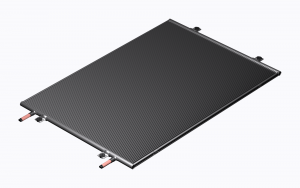
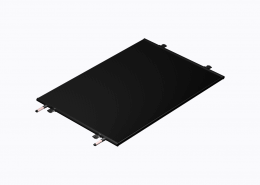
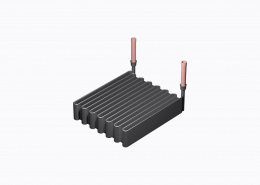
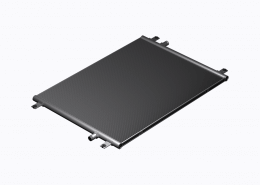
    Brazed aluminium microchannel evaporators for direct expansion and heat pump applications

    Microchannel heat exchanger

In our microchannel evaporators, an internal refrigerant distributor is used in combination with vertical microchannel tube orientation and oversized manifolds. This provides optimum thermal performance over a wide range of operating conditions and design issues, ensures uniform refrigerant distribution in the inlet manifold and equal refrigerant injection across all the multiport microchannel tubes, and counteracts the effects of outlet manifold pressure drop. Additionally, vertical tube orientation ensures free condensate runoff.

​Refrigerant distributor of the evaporator can be operated in reverse refrigerant flow for heating duty in the heat pumps and by using switching valves that allow the same microchannel evaporator to then be used as a condenser for heating operation.

REVERSIBLE COIL DESIGN

Selection software
1
2
3
4
5
6
7
8
1

LOUVER-FIN PLATES

2

EXTENDED FIN EDGES

3

MULTIPORT TUBES

4

REFRIGERANT MANIFOLDS

5

REFRIGERANT CONNECTIONS

6

CASING WITH MOUNT INTERFACES

7

CONDENSATE TRAY

8

SHIELD PLATE

  • Reversible microchannel coil designed to operate in condenser and evaporator modes
  • Low coil internal volume to support low-GWP and flammable refrigerants with charge limitations
  • Casing with integrated condensate tray and protective guard plates to prevent coil damage
  • Easy, low-cost unit integration and mounting
Selection software
  • Financial report
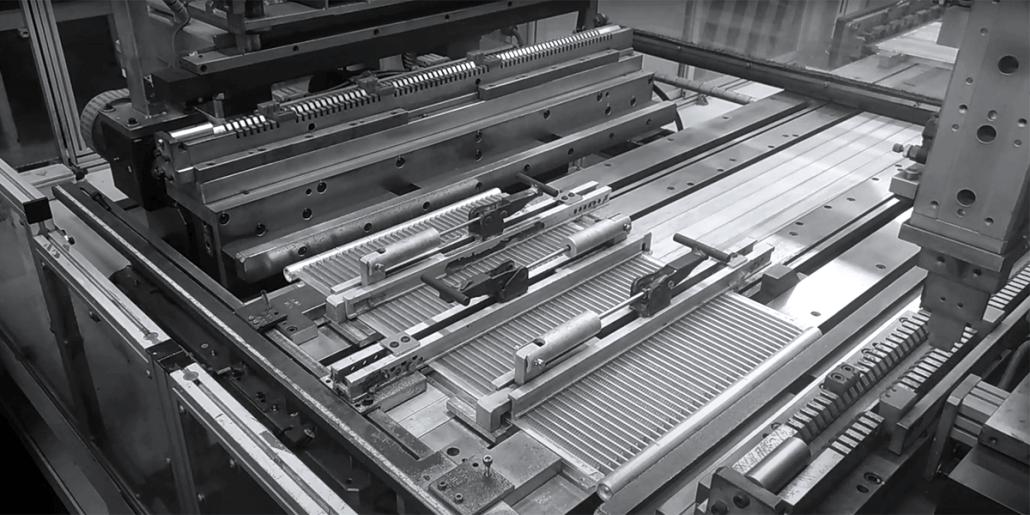
  • MCHE factory machinery

E-COATING PROCESS

At Kaltra, e-coating is performed in-house, using a controlled epoxy electrophoretic process. This ensures complete, uniform coverage—even on internal surfaces—and full compliance with recognized international standards.

Kaltra sees no economic or technical justification for compromising on the core components of the e-coating process. That’s why our coatings are truly first-class—delivering proven performance without marketing exaggeration.

INCOMING CONTROL

The process begins with a thorough inspection of each coil to identify any physical damage or surface contaminants that could interfere with proper coating adhesion. Inlets and ports are securely sealed to prevent the entry of chemicals during processing.

CLEANING & RINSING

To ensure optimal E-coating adhesion, coils are thoroughly cleaned using an alkaline solution that removes dirt, oils, and other surface contaminants. Next is the rinsing process, which consists of two stages: an initial rinse in a heated solution, followed by a second rinse at ambient temperature.

EPOXY PAINT DEPOSITION

Coils are fully immersed in a water-based epoxy paint bath, where an applied electrical current drives the uniform deposition of paint particles onto the aluminum surface through electrophoresis. Kaltra utilizes a cathodic electrocoating system, in which the heat exchanger acts as the negatively charged electrode, attracting positively charged paint particles.

To ensure complete and consistent coverage, several critical parameters are precisely controlled throughout the process:

  • Voltage and current levels
  • Bath composition and paint formulation
  • Immersion duration

POST-RINSE

After deposition, the coils are rinsed to remove any loose or excess paint particles. A final rinse using deionized water ensures a smooth, uniform coating surface and prepares the parts for curing.

COAT CURING

Coils are transferred to a baking oven, where the epoxy coating is crosslinked and cured at temperatures ranging from 80°C to 240°C, depending on the specific paint formulation. Proper curing is essential to achieve maximum coating durability, mechanical strength, and resistance to environmental stress.

UV-RESISTANT TOPCOAT

Epoxy-painted surfaces tend to deteriorate when exposed to direct sunlight, so a UV-protective topcoat is applied using a spray gun to ensure long-term durability.

HELIUM LEAK TEST

After the coating process is complete, each coil undergoes a helium leak test to verify its integrity and ensure that no damage occurred during processing.

LESS REFRIGERANT CHARGE

MCHE
RTPF

SMALLER FINNED AREA

MCHE
RTPF

LOWER WEIGHT

MCHE
RTPF
BeforeAfter

Refrigerant Distributor: How It Works

The primary function of the DX distributor integrated into the inlet manifold of the evaporator coil is uniform refrigerant spreading across the length of the coil, over a wide range of operating conditions and equipment designs. The distributor provides:

  1. Liquid/gas separation of the mixture delivered to the distributor
  2. Injection of liquid refrigerant into distributor orifices and creation of pressure drop to propel the refrigerant and to spread out the liquid substantially evenly along the length of the inlet manifold
  3. Injection of liquid refrigerant into the tube chambers
  4. Prevention of refrigerant flow between refrigerant tube chambers before entering the microchannel tube ports
Selection software

SELECTION SOFTWARE

MCHE selection software includes condenser, evaporator, heat pump, and water coils, making it a complete selection and calculation tool for refrigeration professionals.

The software provides selections and ratings for microchannel heat exchangers which enables the user to select the best-suited product based on several deciding parameters such as heat exchanger application, cooling capacity, refrigerant, evaporation and condensation temperatures, airflow and air temperature and other critical variables in refrigeration systems.

PRODUCT SPECIFICATIONS

Max width [mm]

50 … 2400

Max height [mm]

50 … 2400

Tube width [mm]

12/16/20/25/32/36

Manifold diameter [mm]

16/20/25/30/32/38/42/50

Fin types

FLAT/LOUVERED

Fin pitches [FPI]

10/16/18/19/21/23/24/BY REQUEST

Design pressure [bar]

32/45

Refrigerants

HFC/HFO/NATURAL

Protective coatings

E-COATING/TCP-COATING/HYDROPHILIC

RELATED PUBLICATIONS

Microchannel evaporator

Refrigerant distribution optimization for microchannel evaporators

Next generation of microchannel evaporators by Kaltra: optimized coil geometry to improve refrigerant distribution and evaporation efficiency.
Microchannel evaporator

Microchannel evaporators: a study for efficiency optimization

Continuing to consider practical modalities to improve the efficiency of microchannel evaporators, Kaltra examined the impacts of refrigerant charge quantity and various configurations of refrigerant gas feeding.
Hydrophilic-treated MCHE

Hydrophilic topcoat for microchannel heat exchangers

Hydrophilic coating for microchannel heat exchangers: increases performance under wet conditions, improves condensate drainage and enhances corrosion resistance.
Microchannel evaporator coil

Dual-circuit microchannel evaporators to revamp performance of air-source heat pumps

Kaltra extends portfolio with high-performance, dual-circuit microchannel evaporators designed and optimized for air-source heat pumps, including reversible units.
Microchannel evaporator

Optimized microchannel evaporator design boosts efficiency

Kaltra rolls out all-aluminum microchannel evaporators with optimized outlet manifold design to increase partial load efficiencies.
Air-source heat pump

Microchannel coils for air-source heat pumps

Air-source heat pumps based on MCHE offer remarkable advantages but are complicated in design: Kaltra presents its efficiency-improving solution.
Refrigerant distributor

Optimization of refrigerant distribution for microchannel evaporators

Microchannel evaporators with optimized manifold design: uniform refrigerant distribution, improved heat transfer, higher capacity.
E-coated microchannel coil

Heat exchanger protection with electrocoating

Electrocoating offers extremely high corrosion resistance for all-aluminum microchannel heat exchangers, making them the most suitable solution for use in extra-corrosive environments.
Serpentine coil

Serpentine coils for compact cooling systems

Microchannel serpentine coils for condenser and evaporator use: low-charge, compatible with HFC/HFO and natural refrigerants, suitable for any applications
Microchannel heat exchanger

Microchannel heat exchangers as an advanced alternative to traditional HVAC coils

Advantages and benefits of new-generation microchannel heat exchangers for HVAC applications in comparison to traditional finned tube heat exchangers.
Precision air conditioner

Technology rally: microchannel vs. finned tube evaporator

A comparison for precision air conditioning system with finned tube evaporator and the system with microchannel evaporator: performance and ergonomic acpects.
Microchannel coil

Corrosion protection for microchannel heat exchangers

Corrosion resistance of the microchannel heat exchangers in highly polluted environments; protective coatings and special treatments.
Microchannel evaporator

Alcoil receives U.S. and international patents for microchannel evaporator design

Alcoil announces the issuance of US and European patents, which relates to an improved and advanced microchannel evaporator design.